01
Locked structure, open content
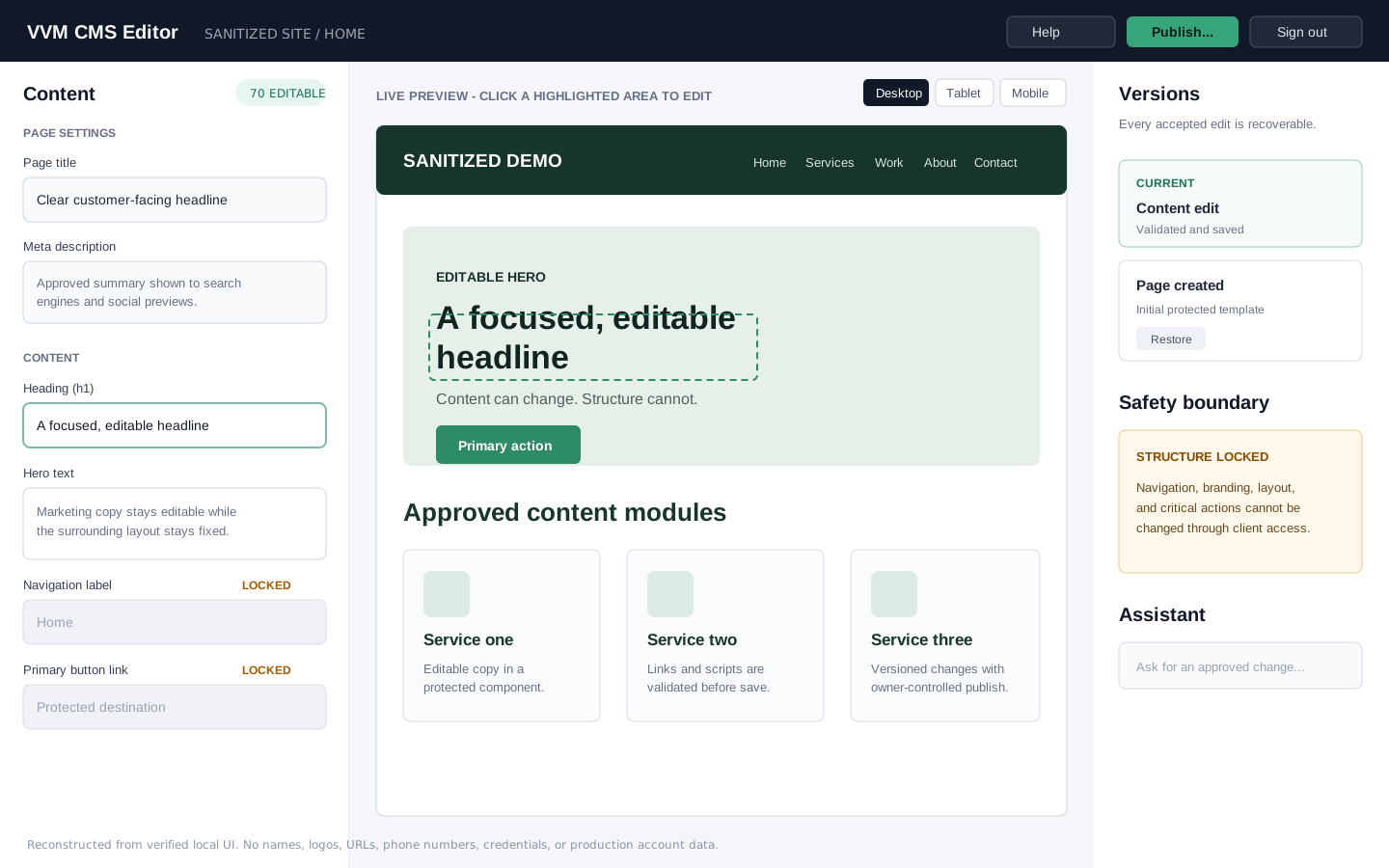
When a site is taken on, its layout — navigation, footer, branding, critical buttons — is frozen as structural 'chrome'. Only approved content slots (specific texts, images, links) are editable. A client can change the words; they cannot move, delete, or restyle the page.
02
Every edit is checked before it can apply
A deterministic validation layer — not an AI, not a setting — is the only path a change can take. Edits that would inject scripts, empty out required text, or point links somewhere unsafe are rejected with a plain reason. The same rules apply to everyone, including the operator.
03
Owner-only publishing
Clients log in through a private link scoped to their own site — they can't see other sites and can't publish. The operator reviews and publishes; published sites deploy as plain static files to their own hosting.
04
Versioned, backed up, recoverable
Content changes are versioned with rollback. Backups are integrity-verified bundles stored off the host, and restore only accepts bundles that pass verification. An append-only audit history records what changed, when, and by whom.
05
Proven against a real client site
The system was validated end-to-end on a real trilingual school website: all pages ingested, structure locked (112 editable vs 55 locked slots per page), forbidden edits rejected with the right reasons, and the exported site deployed and verified on an isolated pilot project — without touching the client's live site.